Saving
How Much Emergency Fund Do You Really Need?
The standard "three to six months of expenses" is a starting point, not a rule. Here is how to size your emergency fund based on your real situation.
Article archive
Every guide published on Shehab Finance, sorted by newest first. Browse by topic below or dive straight in.
How Much Emergency Fund Do You Really Need?
The standard "three to six months of expenses" is a starting point, not a rule. Here is how to size your emergency fund based on your real situation.

How to Start Investing With $100
You do not need thousands to begin. Here is a beginner-friendly path to putting your first $100 to work — and why starting small still matters.
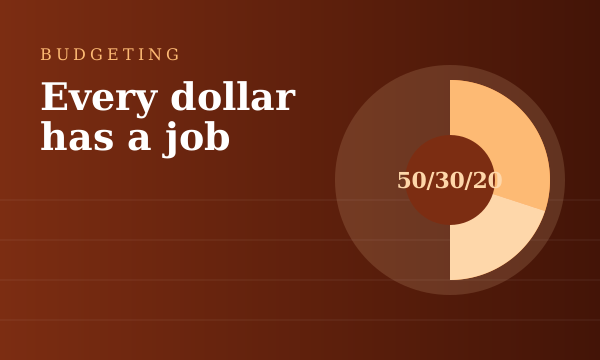
The 50/30/20 Budget Rule, Explained With a Real Example
A simple budgeting framework that splits take-home pay into needs, wants, and savings — with a worked example and adjustments for high cost of living.
Debt Snowball vs Avalanche: Which Pays Off Debt Faster?
Two popular strategies, one goal: becoming debt-free. Here is how each works, a worked example, and how to choose the one you will actually stick with.

What Actually Affects Your Credit Score (Ranked by Impact)
Credit scores look mysterious but rest on five simple factors, and two of them account for the majority of your score. Focus there first.
High-Yield Savings Accounts: How They Work and How to Choose One
High-yield savings accounts pay roughly ten to twenty times more interest than traditional bank accounts. Here is how they work, how they are insured, and how to pick a good one.
Zero-Based Budgeting: How It Works and Who It Is For
Every dollar gets a job before the month begins. Zero-based budgeting is the most precise method available — here is how to actually run one without burning out.
Index Funds Explained: The Simplest Way to Invest
Index funds now hold more money than all actively managed US mutual funds combined. Here is why they became the default recommendation for long-term investors.
Sinking Funds: The Budgeting Trick That Stops Big Bills From Blindsiding You
Annual insurance, car maintenance, holiday spending — the expenses that wreck budgets are the ones that are large but predictable. Sinking funds solve that problem.
How to Build Credit From Scratch (No Cosigner Required)
Building a credit history from zero used to require a cosigner or an established relative. Today, three specific tools let almost anyone start in a single afternoon.
Balance Transfer Cards: When They Save You Money (and When They Don't)
A 0% balance transfer can save hundreds in interest — or cost you more than it saves. The difference comes down to one number and one honest question.
How to Cut Your Monthly Bills Without Feeling Deprived
Most household budgets contain a few large recurring costs and dozens of small subscriptions. Focusing on the right ones creates real savings without changing how you live.
Roth IRA vs Traditional IRA: How to Choose
Both accounts offer powerful tax advantages, but they work in opposite directions. Choosing the right one depends mostly on where your tax rate will be in retirement.
CDs vs High-Yield Savings: Which Is Better for Your Cash?
Certificates of deposit lock in a rate but lock up your money. High-yield savings stay flexible but the rate can drop. Here is how to choose between them.
Credit Utilisation: Why 30% Is the Number You Keep Hearing
Credit utilisation is the second-largest factor in your credit score. Understanding how it is calculated — and when it is calculated — is the key to using it.
Student Loan Repayment Options, Explained
Federal student loans offer more repayment options than any other type of debt. Understanding them can save borrowers thousands — or years of unnecessary payments.
Dollar-Cost Averaging: The Boring Strategy That Usually Wins
Dollar-cost averaging removes market timing from investing. It rarely produces the best possible outcome, but it very often produces a good one — which matters more.
How to Budget on a Variable Income
Freelancers, contractors, and commission earners cannot budget from a steady paycheque. Here is a system that keeps a variable-income household stable month to month.
How to Read Your Credit Report — And What to Do When It's Wrong
Your credit report is the raw material behind every credit score you have. Reading it once a year — and disputing errors — costs nothing and can raise your score meaningfully.
Debt Consolidation: What It Is and When It Actually Helps
Debt consolidation combines several debts into one lower-rate payment. It is a useful tool for the right borrower — and a trap for the wrong one.
How a 401(k) Actually Works (And How to Get the Most Out of It)
A 401(k) is the most common retirement account in the US, and its employer match is often the single best investment return available to any employee.
Credit Card vs Debit Card: Which One Should You Actually Use?
For most day-to-day spending, a credit card offers stronger consumer protection and better rewards — but only if used with the discipline of a debit card.
When Does It Make Sense to Refinance a Mortgage?
The old rule of "refinance if rates drop 1 percent" is a rough shorthand for a math question that has a clean answer once you calculate the breakeven point.
How to Calculate Your Net Worth (And Why It Matters More Than Income)
Income tells you what you earn. Net worth tells you what you actually have. It is the single most useful number for tracking your long-term financial progress.
Side Hustle Taxes: A Beginner Guide for US Workers
Side income comes with tax responsibilities most first-time earners miss until the following April. Here is what to set aside, when to pay, and what to deduct.
Health Savings Accounts (HSAs): The Most Tax-Advantaged Account Most People Ignore
A properly used HSA offers a triple tax advantage no other account can match. For eligible savers, it can quietly become one of the best retirement accounts available.
The Right Order of Financial Priorities (Most People Get This Backwards)
A practical order of operations for money — from a starter emergency fund to long-term investing — that avoids the common mistake of skipping cheap wins for flashier ones.
How to Choose a Budgeting App (What Actually Matters)
Every budgeting app promises to change your life. The one that actually will is the one you will still be opening in six months. Here is how to evaluate them honestly.
Inflation Explained: How Rising Prices Affect Your Money
Inflation is not just a headline number. It is the silent tax on cash. Here is how it works, why it matters for your savings, and how to protect against it.
Target-Date Funds: One-Fund Retirement Portfolios, Explained
A target-date fund is a single fund that holds an entire retirement portfolio and adjusts it automatically over time. For many workers it is the simplest correct choice available.
ETF vs Mutual Fund: What Actually Matters for Long-Term Investors
ETFs and mutual funds can hold identical portfolios. The differences that matter for long-term investors come down to how each is bought, taxed, and automated.
How Much Should You Put Down on a House?
The 20 percent rule you keep hearing is not required. Here is how to decide the right down payment for your situation, balancing interest, insurance, and opportunity cost.
Term vs Whole Life Insurance: What Most People Actually Need
The life insurance industry sells complexity. For most households, the simplest, cheapest option is also the correct one. Here is how to decide honestly.
Compound Interest: The Single Most Important Idea in Personal Finance
Compound interest is the reason small consistent savings become large amounts over time, and also the reason small consistent debts become impossible ones. Here is how it works.
Credit Card Rewards Explained (Without the Hype)
Credit card rewards can be a genuine perk or an expensive distraction. The line between the two is drawn by whether you carry a balance.
How to Never Pay a Bank Fee Again
The average American household still pays over $200 a year in avoidable bank fees. Getting that number to zero takes about an hour and stays free forever.
Auto Loans: What Actually Determines the Total Cost
Dealers negotiate on monthly payment, but total cost is set by three levers: price, rate, and term. Ignoring any of them is how buyers end up upside-down on a car loan.
Backdoor Roth IRA: What It Is and How It Works
High earners are phased out of direct Roth IRA contributions. The backdoor Roth uses a legal two-step to preserve access to the Roth account regardless of income.
The Cash Envelope System: An Old Method That Still Works
The envelope system is a decades-old budgeting method that keeps working for one reason: the physical friction of handling cash slows down spending in ways an app cannot.
Social Security 101: How Benefits Are Calculated and When to Claim
Social Security is one of the largest lifetime assets most Americans have. When to claim is worth thinking about carefully because the difference can be tens of thousands of dollars.